# Kwang Lim Koh
L.L.B. (1945) from Keijō Imperial University Law School; M.A. (1950) and Ph.D. (1953) from Rutgers University; LL.M. (1952) and S.J.D. (1955) from Harvard Law School; LL.B. (1955) from Boston College Law School
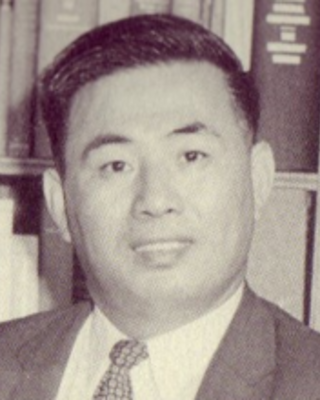
Kwang Lim Koh (Ko Kwang-nim, 고광림, 高光林, meaning “Shining Forest,” 1920–1989) was the first Korean to receive both a master’s and a doctorate degree from Harvard Law School.[\[1\]](#_ftn1) Koh was born on October 20, 1920, in Cheju (Jeju) Island in Japanese-occupied Korea. The son of a textile merchant, Koh had five brothers and sisters and attended four years of grammar school in Aewŏl (涯月), Cheju Island. Koh was transferred to the Japanese-run Cheju Public Grammar School in Cheju City for fifth and sixth grade, where he finished at the top of his class. Koh then passed a competitive entrance examination to attend the Japanese-run Keijō (Seoul) Normal School, where Koreans composed only around 30 percent of the student body. Despite the discrimination, Koh became a distinguished student at that school by finishing five years of coursework in just three years. He was then admitted to Keijō Imperial University (京城帝國大學), where he graduated summa cum laude in 1945. By the time of his graduation, he spoke multiple languages and became a black belt in judo. Koh’s university classmates found him to be a “genius of a very hard-working type” who often studied overnight and slept in between classes.[\[2\]](#fn2)
Koh’s time in college coincided with World War II. In 1942, the-then Japanese Governor-General of Korea issued a decree forcefully recruiting Korean students into the Japanese army. Koh, however, was seriously ill around this time and was confined to Cheju Hospital on his home island to recuperate for about a year. As a result, Koh was not drafted into the war effort.
After graduating, Koh remained at the university to teach for a few years. By that point, Korea was liberated from Japanese occupation following Japan’s surrender to the Allied Forces. The new U.S. Military Government in Korea merged the former Keijō Imperial University with several independent colleges in Seoul to establish Seoul National University in 1946. Left-wing student activists boycotted the new university, decrying it as being an America-oriented colonial education center. Koh, however, exercised foresight when he urged his students to attend the university to prepare for the task of nation-building. Koh also volunteered to teach a free English language class to students over winter break using Washington Irving’s *Sketchbook*, telling students that English would help them learn from advanced countries such as the United States.
Koh’s first official course at the university was a pre-law English reading course that used Charles Dickens’ *A Christmas Carol* as the textbook. The course proved to be a popular one that attracted over a hundred students to each session. Koh also taught an advanced English reading course using Hans Kelsen’s *General Theory of Law and State* as the textbook. There was only a single copy of the book available in Korea at the time, so Koh borrowed it and made mimeographed copies of the book to distribute to his students for the class. Around this time, Koh was married to his first wife with whom he had one daughter, Carolyn Kyongshin Koh, later Choo. While his wife unfortunately soon passed away “after a long illness,”[\[3\]](#fn3) their daughter Carolyn later came to America as a high school student, then went on to study chemistry at Harvard College (BA, 1969) and the Massachusetts Institute of Technology (PhD, 1973).
In 1949, a year prior to the outbreak of the Korean War, Koh moved to New Brunswick, New Jersey in the United States for studies in political science at Rutgers University, from which he received a M.A. in 1950 and a Ph.D. in 1953. It was also around this time that Koh met another Korean student named Hesung Chun (Chŏn Hye-sŏng, 전혜성, 全惠星, 1929–present), later Hesung Chun Koh. She was then a sociology and economics major at Dickinson College as an exchange student. The two got married on June 16, 1951, and had five children together over the next decade: Howard Kyongju (Yale College Class of 1973, Yale University School of Medicine Class of 1977) in 1952, Edward Tongju (Harvard College Class of 1974, Harvard Medical School Class of 1981) in 1953, Harold Hongju (Harvard College Class of 1975, Harvard Law School Class of 1980) in 1954, Jean Kyongun (Harvard College Class of 1979, Harvard Law School Class of 1982) in 1958, and Richard Jongju (Harvard College Class of 1982) in 1960.
During the same year that Koh and Chun Koh were married, the couple moved to Cambridge, Massachusetts, where Koh had received a generous fellowship to pursue an LL.M. degree at Harvard Law School. At Harvard, Koh developed an interest in studying the international law of the seas. His first paper was on the international regulation of fisheries, and his dissertation in 1955 for his doctorate degree (S.J.D.) was on the issue of the continental shelf and territorial waters. Koh also took courses taught by Professor Manley O. Hudson, a former U.S. Judge to the Permanent Court of International Justice, and Professor [Louis B. Sohn](https://hls.harvard.edu/today/louis-b-sohn-1914-2006/), who first observed Koh to be “rather quiet in class” but found Koh to write “better and better examinations and seminar papers” each year.[\[4\]](#fn4)
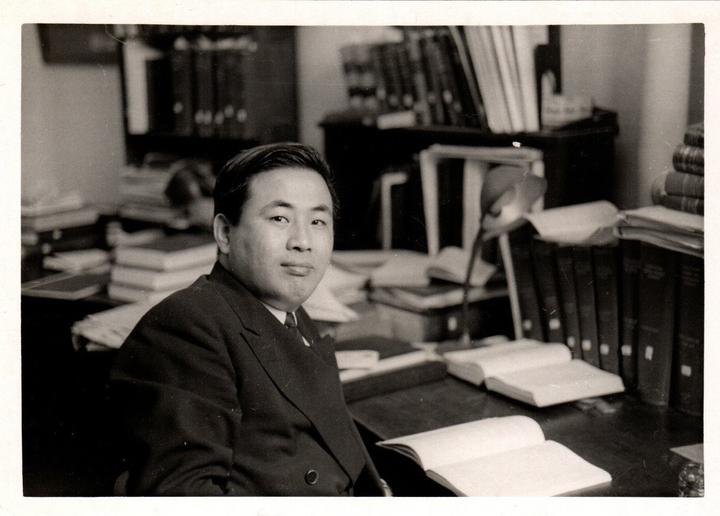
Kwang Lim Koh at the Basement of Langdell Hall, Harvard Law School. Courtesy of the Koh Family.Koh also received a Bachelor of Laws degree (LL.B.) in Common Law from Boston College Law School in 1955. Starting from 1953 until 1960, he held teaching positions at nearby Boston University School of Law, where he taught Public International Law and Jurisprudence as a Lecturer of Law. Additionally, from 1958 to 1960, Koh taught three courses at Boston University as a Lecturer on Government: International Organization and International Law, Government and Politics of the Far East, and History of Central and East Asia. His wife Hesung Chun Koh was among the first women to earn a Ph.D. degree in Sociology from Boston University in 1959.
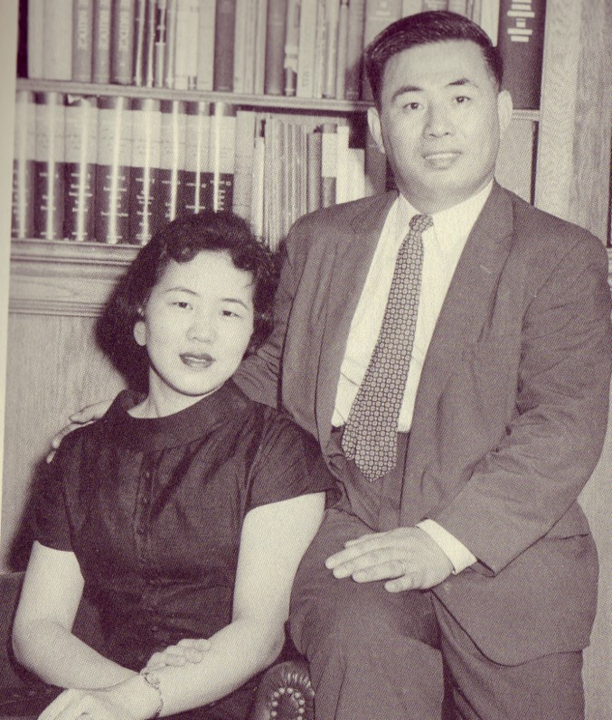
Kwang Lim Koh and Hesung Koh Teaching Team at Boston University, Courtesy of the Koh Family.During their time in Cambridge, Massachusetts, Koh and his wife Chun Koh strove to promote cultural and academic exchanges between Korea and the United States. Together they founded a non-profit Korea Institute in 1956, with Koh serving as the institute’s first president. Through the institute, the couple organized lecture series, established scholarships for graduate students to translate English books into Korean, and held annual book drives to send used books to rural parts of Korea. The Koh family also often provided hospitality to dozens of members of the local Korean student population at the time, with Koh serving as a mentor for numerous Korean students passing through Boston and often inviting them to meals at his family home.
Koh was also a spiritual person who deeply believed that life had meaning and purpose. In 1953, together with several fellow Korean graduate students, Koh attended the first Korean church in Boston established by Rev. Pak Tae-sŏn (1916–2010). The church celebrated its first worship service on Thanksgiving Sunday in 1953 at Marsh Chapel of Boston University, where Koh was teaching at the time as a Lecturer of Law.[\[5\]](#fn5) Koh also served as the second president of the Korean American Society of Boston in 1955–1957, succeeding Dr. Doo Soo Suh (Sŏ Tu-su, 1907–1994), a former Dean of Seoul National University, who held the first appointment in Korean Studies at Harvard University.[\[6\]](#fn6) Suh taught Korean language and history at Harvard from 1952 until he moved to the University of Washington in 1955.
In 1960, student demonstrations in Korea overthrew the regime of Syngman Rhee (Yi Sŭng-man, 1875–1965), the president-turned-dictator of South Korea. Koh had strongly protested Rhee’s government while living in the United States, and his anti-Rhee activism resulted in the Rhee regime blacklisting Koh from entering Korea. But, following the toppling of the Rhee dictatorship that summer, Koh was able to return to Korea for the first time in eleven years to campaign for then-Vice-President Chang Myun (Chang Myŏn, 1899–1966) and his Democratic Party. Koh gave numerous campaign speeches around Korea in support of the Democratic Party, and at one point that summer also returned to his hometown of Aewol, Cheju, where he received a “hero’s welcome” from the townspeople.[\[7\]](#fn7) In the fall of 1960, the Democratic Party came into power, and Chang Myun was elected Prime Minister of Korea. Koh in turn was first appointed Envoy Extraordinary and Minister Plenipotentiary to the Korean Mission to the United Nations, where he served as a member of the Korean delegation to the 15th Session of the United Nations General Assembly. He was then transferred to the Korean Embassy in Washington as Envoy Extraordinary and Minister Plenipotentiary to the United States, the highest-ranking Korean diplomat in Washington. However, on May 16, 1961, a military coup led by then-Major-General Park Chung Hee (Pak Chŏng-hŭi, 1917–1979) removed the democratic government from power. Koh subsequently resigned from his diplomatic post in protest and refused to serve a military government. He then returned to academic activities and continued his democratic activism. Koh argued against the legitimacy of Park’s government to the U.S. Senate and the U.S. House of Representatives in 1961 and hosted regular weekly meetings called *Hanhoe* at his family home, inviting Korean scholars and students to discuss the issue of how to democratize Korea.
Following the overthrow of the Chang Myun government, with the help of Deputy National Security Advisor Walt W. Rostow, Koh and his family moved to New Haven, Connecticut, where Koh became a Senior Fellow in 1962 at Yale Law School; Rostow’s brother Eugene V. Rostow was then Dean. Later, from 1963 to 1966, Koh and Chun Koh co-taught a seminar on Comparative East Asian Law and Society at Yale as Visiting Lecturers of Law. On September 1, 1963, Koh also became an Associate Professor at Hofstra University in Hempstead, New York, where he taught courses including Introduction to Politics, Comparative European Government, Comparative East Asian Government, International Law, International Organization, International Relations, Public Policy Formulation in Underdeveloped Countries, Colonialism and Nationalism, and an International Relations in Asia seminar.
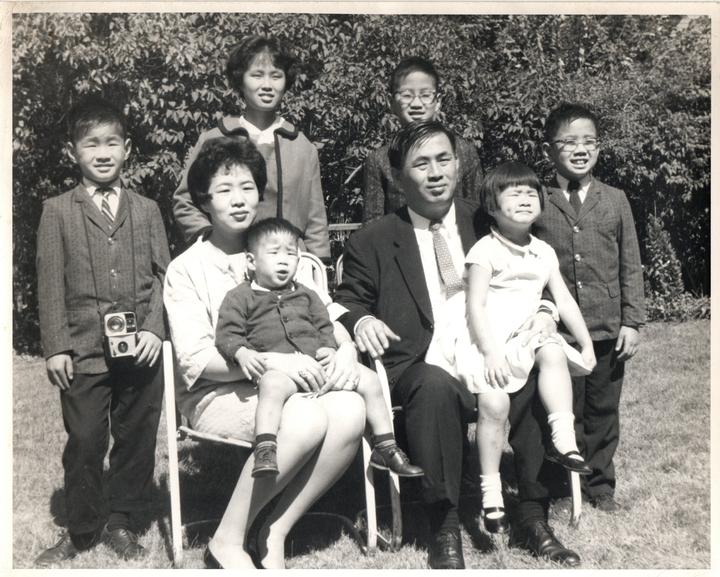
The Koh Family in 1961 in New Haven, CT. Courtesy of the Koh Family.In 1966, Koh was appointed as a Professor of Political Science at Central Connecticut State College where he remained for the next 23 years of his career and served as the director of the college’s Center for non-Western Studies as well as the Center for International and Area Studies. Koh also traveled to Korea in the summer of 1978 with F. Donald James, President of Central Connecticut State College, to promote Korea-U.S. educational exchanges, as part of the member of the President’s Mission of Central Connecticut State College to Japan, Korea, Thailand, Indonesia, and India. In 1979, the college established the Kwang Lim and Hesung Chun Koh Scholarship Fund, which offers three full tuition scholarships to students from Korea, Japan, and the United States, in honor of Koh and his wife’s “tireless efforts and lifetime devotion to international understanding.”[\[8\]](#fn8) A Kwang Lim and Hesung Chun Koh Scholarship Fund also exists at Yale Law School to support students. Koh was a popular and charismatic teacher and a prolific researcher and writer. He published numerous articles and books in both Korean and English, including *British Government* (1970), *French Government* (1971), *American Review I-V* (1972–1978), *Presidential Election in the U.S.A. with Special Reference to the 1972 Election Including Watergate* (1976), *International Regulation of Fisheries* *with Special Reference to Those in the Northern Pacific* (1980), and *The Continental Shelf* (1980).[\[9\]](#fn9)
Even outside of their academic careers, the Kohs continued their work of fostering the Korean American community. With their move from Boston to New Haven, their Korea Institute also relocated and was renamed the [East Rock Institute](https://www.eastrockinstitute.com/), which took up residence in a building Koh purchased in 1966. Through the institute, Koh and his wife continued to foster cross-cultural exchange between Korea and the United States, including hosting annual conferences regarding Koreans and Korean Americans. In recognition of their work in supporting the Korean community and fostering cross-cultural exchanges, Koh and his wife in 1977 were invited by the Korean Metro United Church and the Toronto Korean United Church to speak to a Korea-Canadian audience in the Toronto area regarding their experience. The archives of East Rock Institute have been transferred to Yale’s Beinecke Library to document the origin of Korean studies at Yale and in New Haven.
Koh passed away at the age of 68, on September 17, 1989, in New Haven, Connecticut. Koh is survived by his wife Dr. Hesung Chun Koh, his six children, and grandchildren. Leaving behind his small fishing village off the coast of Korea, Koh crossed the Pacific to become a pioneer for the Korean American community in the United States. He was a mentor to hundreds and a teacher to even more. As the first Korean to receive both a master’s and doctorate degree from Harvard Law School, Koh also became the “first Korean law professor in the United States.”[\[10\]](#fn10) Koh and his wife also became among the first Asian Americans to teach at Yale, when they co-taught the East Asian Law and Society Seminar at Yale Law School. Koh’s legacy of service and commitment to others was passed on to his children and grandchildren, many of whom have gone on to distinguished careers in academia and public service. In a volume of essays compiled in honor of Koh’s *hoegap* (回甲), or sixtieth-birthday, Koh’s family remembers him as someone who, “encourages us to endure… and to find something more to give to others.”[\[11\]](#fn11) Koh leaves a legacy that has done both.
Written by Andrew Young Jun Kim, 3/25/2025
---
### **Endnotes**
[\[1\]](#p1) This biography is primarily based on the following sources: Howard Kyongju Koh, ed, *Koh Kwang Lim, Essays in Honor of His Hwegap: 1980* (New Haven, CT: East Rock Press, 1982) (hereafter *Koh Kwang Lim*); Howard Kyongju Koh, ed, *Hesung Chun Koh, Essays in Honor of Her Hwegap: 1989* (New Haven, CT: East Rock Press, 1992); “Kwang Lim Koh, 68, Envoy, Dies” ([https://www.nytimes.com/1989/09/20/obituaries/kwang-lim-koh-68-envoy-di…](https://www.nytimes.com/1989/09/20/obituaries/kwang-lim-koh-68-envoy-dies.html)); “A Family in Law” (); and “Dr. Ko Kwang-lim, Dr. Ko Hyeseong-Cheon and the Ko family” (). The photos in this biography were provided by the Koh family. We would like to thank Drs. Hesung Chun Koh, Howard Kyongju Koh, and Harold Hongju Koh for their assistance.
[\[2\]](#p1) *Koh Kwang Lim*, 82.
[\[3\]](#p2) *Koh Kwang Lim,* 83.
[\[4\]](#p3) *Koh Kwang Lim,* 46.
[\[5\]](#p4) For more information about the founding of the first Korean church in Boston, see Posŭt’on Hanin Kyohoe 60 nyŏnsa P’yŏnch’an Wiwŏnhoe, *Posŭt’on Hanin Kyohoe 60 nyŏnsa, 1953–2013* \[A 60-Year Pilgrimage of the Korean Church of Boston: 1953–2013\] (Brookline, MA: Posŭt’on Hanin Kyohoe, 2015), 108–117. This history is also available online on the Korean Church of Boston’s website ([https://kcboston.org/ministry/wp-content/uploads/2022/02/KCB\_60th\_Histo…](https://kcboston.org/ministry/wp-content/uploads/2022/02/KCB_60th_History-eBook_-Part-2.pdf)). About Rev. Pak, see also “First Korean Church of Boston,” here ([https://sites.bu.edu/koreandiaspora/institutions/first-korean-church-of…](https://sites.bu.edu/koreandiaspora/institutions/first-korean-church-of-boston/)).
[\[6\]](#p4) *Posŭt’on Hanin Kyohoe 60 nyŏnsa*, 116. See also “The Korean Society of Boston,” ([https://sites.bu.edu/koreandiaspora/institutions/the-korean-society-of-…](https://sites.bu.edu/koreandiaspora/institutions/the-korean-society-of-boston/)) and “A Brief History of EALC and Asian Studies at Harvard” ().
[\[7\]](#p5) *Koh Kwang Lim*, 91.
[\[8\]](#p6) *Ko Kwang Lim*, 6. For more information about the scholarship, see “CCSU Foundation, Inc., Endowed Scholarships” ().
[\[9\]](#p6) For a fuller list of his publications, see *Ko Kwang Lim*, 6–8.
[\[10\]](#p7) “The Record: News & Stories from BU Law,” May 9, 2023, Boston University School of Law ().
[\[11\]](#p7) *Koh Kwang Lim*, 107.
### Bibliography
“A Brief History of EALC and Asian Studies at Harvard.” .
"A Family in Law.” .
“CCSU Foundation, Inc., Endowed Scholarships.” .
“Dr. Ko Kwang-lim, Dr. Ko Hyeseong-Cheon and the Ko family." [https://sites.bu.edu/koreandiaspora/individuals/boston-in-1950s/dr-kwan…](https://sites.bu.edu/koreandiaspora/individuals/boston-in-1950s/dr-kwang-lim-koh-dr-hesung-chun-koh-and-the-koh-family/).
“First Korean Church of Boston.” [https://sites.bu.edu/koreandiaspora/institutions/first-korean-church-of…](https://sites.bu.edu/koreandiaspora/institutions/first-korean-church-of-boston/).
Koh, Howard Kyongju, ed. *Hesung Chun Koh, Essays in Honor of Her Hwegap: 1989.* New Haven, CT: East Rock Press, 1992.
Koh, Howard Kyongju, ed. *Koh Kwang Lim, Essays in Honor of His Hwegap: 1980.* New Haven, CT: East Rock Press, 1982.
“Kwang Lim Koh, 68, Envoy, Dies.” [https://www.nytimes.com/1989/09/20/obituaries/kwang-lim-koh-68-envoy-di…](https://www.nytimes.com/1989/09/20/obituaries/kwang-lim-koh-68-envoy-dies.html).
Posŭt’on Hanin Kyohoe 60 nyŏnsa P’yŏnch’an Wiwŏnhoe. *Posŭt’on Hanin Kyohoe 60 nyŏnsa, 1953–2013: Posŭt’on e omkyŏ simŏjin sullyejadŭl ŭi iyaji* \[A 60-Year Pilgrimage of the Korean Church of Boston: 1953–2013\]. Brookline, MA: Posŭt’on Hanin Kyohoe, 2015.
“The Korean Society of Boston.” .
“The Record: News & Stories from BU Law,” May 9, 2023. Boston University School of Law.
*The Harvard Korean Alumni Biographies Project and the Project website are copyright © 2024 President and Fellows of Harvard College and/or its licensors. Unauthorized reproduction or distribution is not permitted.* *Please contact Executive Director Susan Laurence (*[*susan\_laurence@harvard.edu*](mailto:susan_laurence@harvard.edu)*) for any concerns or questions*.
- ## Decade
[1950-1960](/decade/1950-1960)
- ## Korean Alumni
[Graduate School of Arts and Sciences](/korean-alumni-decade/gsas)