
Kyunghoon Claude Lee

Class Portrait of Kyunghoon Lee. HBS Annual Report, 1969. HBS Archives, Baker Library, Harvard Business School.
Kyunghoon Claude Lee (Yi Kyŏng-hun 李慶勳, 1944–present), one of the earliest Koreans who studied at the Harvard Business School, was a successful businessman.[1] Lee was born on July 17, 1944, in Seoul, Korea, as the first child of Yi To-yŏng (李道榮, 1913–1973) and Ch’oe Ae-gyŏng (崔愛卿, 1918–1998). Lee’s father, a native of Ch’ŏngju, Ch’ungch’ŏng Province, was a businessman who owned a talcum mine in Ch’ungju. He also founded the Hongik Educational Foundation (Hongik Hagwŏn) in 1957.[2] Lee’s mother, a native of Haeju, Hwanghae Province, took charge of the Foundation after his father passed away in 1973. As the eldest son of the family, Lee grew up bearing many responsibilities.
Like many other Korean families, the comfortable life of Lee’s family changed drastically when the Korean War broke out in 1950. Lee’s father, who had been an elected national assemblyman (minŭiwŏn) before the war, was forced to flee Seoul in fear that he would be captured by North Korean agents. Meanwhile, Lee, his mother, and his siblings tried to keep a low profile in Seoul during the three months of occupation by North Korea. His mother bore a particularly heavy burden—not only did she have to feed her children as the sole provider left in the home, but she was also subjected to intense pressure from North Korean agents who tried to force her into revealing his father’s whereabouts. Eventually, his family fled to Pusan in December 1950. Due to the war, Lee had been unable to attend school during the time when his family stayed in Pusan. When he resumed elementary school after his family returned to Seoul, he found himself far behind his peers in school. However, despite his initial academic struggles, he eventually grew to become an exemplary student in middle and high school. He attended Kyŏngbok Middle and High School, following in the footsteps of his father who had been an alumnus.
When the time came for Lee to decide where he wanted to go to college and what he wanted to study, his dream of attending medical school conflicted with his parents’ desire for him to follow in his father’s footsteps once again by attending business school. Ultimately, he gave up his dream of going to medical school and adhered to his parents’ wishes by attending the College of Business at Seoul National University from 1963 to 1967. Additionally, although most of his peers were serving their mandatory military service at that time, his service was waived due to his poor vision.
After graduating from college in 1967, Lee applied to multiple business schools in the United States, including Columbia and Cornell, but ultimately decided to choose Harvard Business School (HBS) based on its prestigious reputation, even amongst Koreans. However, he faced many unexpected challenges at HBS. Although he came over to the United States with a decent level of proficiency in English, he felt culturally lost amongst his American classmates. Lee was the only Korean student during his time at HBS (1967–1969) and only the second Korean ever to attend HBS. The instructional style at HBS compounded his foreign status, as he felt like he could not understand what was going on in participation-heavy classes that focused on case studies, not lectures. There was one other Asian student from Japan who also found the business school classes extremely challenging.

Although he struggled during his first year of business school, life in America became much more optimistic for Lee after he met his future wife, Bernadette, during the summer of 1968. The two met in New York City, at the International House, which was a dormitory established by John B. Rockefeller to foster greater interactions between American students and foreign students attending college in New York. At the time, Bernadette was a graduate student at Columbia and had recently arrived in America herself, coming from Hong Kong in 1966. They spent the summer together, and she helped him learn English. Eventually, she came to visit him at school in Cambridge, during one of the coldest winters in Boston.
However, not everything was easy for the happy couple and for Lee in particular. Although he managed to pass the rest of his classes and earn his degree, he was unable to attend his graduation in 1969 due to family troubles. Not only did his parents, relatives, and friends disapprove of him marrying a non-Korean, but they also wanted him to return to Korea. Lee, however, desired to study more and see the world with Bernadette. Ultimately, he decided to marry Bernadette and stay in America, which strained his relationship with his family and friends back in Korea. Shortly after their marriage, the two were able to quickly acquire green cards and later obtain citizenship, further cementing their future in America.

After graduation, Lee worked for a few years, but his ultimate goal was to pursue further studies. His wish was granted when he had the opportunity to travel to Seattle to meet Professor Gerald Paulik, a professor at the University of Washington who had just started a discipline involving computer modeling of the environment. After a successful meeting, Paulik decided to accept Lee as one of his students, marking what would have been an exciting new opportunity for Lee. However, Paulik abruptly passed away soon afterwards, and Lee was back at square one in deciding his future. After Paulik’s death, Lee tried to continue his graduate studies. He found another adviser and conducted modeling studies on fish, even going to Peru for a research trip. He spent seven years in graduate school at the University of Washington, from 1972 to 1979, but ended up not finishing his doctoral program due to conflicts with his adviser.
His educational background in business and technology helped Lee to seek a new opportunity in business in the technological sector. He went back to Korea in 1979 to start a new business. However, during that same year, South Korean President Park Chung Hee had just been assassinated, which left the country in shock. Nevertheless, Lee continued with his original plans and met with his father’s old suppliers in the crystal industry to obtain the resources he needed.
Lee saw an opportunity for a new kind of technology for computers and started his company, Pletronics, Inc., which developed hardware using crystals and oscillators to track time for computers. He started his business in 1979 and managed it successfully for forty years, with Bernadette as his business partner. Lee handled long-term strategy and managing the suppliers, while Bernadette handled all things administrative, finance, and personnel related. The two overcame many challenges together, some of which included navigating a niche, new market; facing racial discrimination as Asian business owners; keeping up with the latest technologies; managing personnel; and more. However, their efforts bore fruit as the company became more and more successful, acquiring suppliers and buyers from Korea, China, Japan, and other Asian countries, and employing as many as fifty employees at one point.
Having sold his company in 2019, Lee is now enjoying retired life with his wife, Bernadette, in Seattle, WA. He has been able to make use of his free time with one of his favorite hobbies—reading. His longtime favorite author is Bertrand Russell, and he has read a lot of Western thought and philosophy. However, he also enjoys Korean fiction as well.
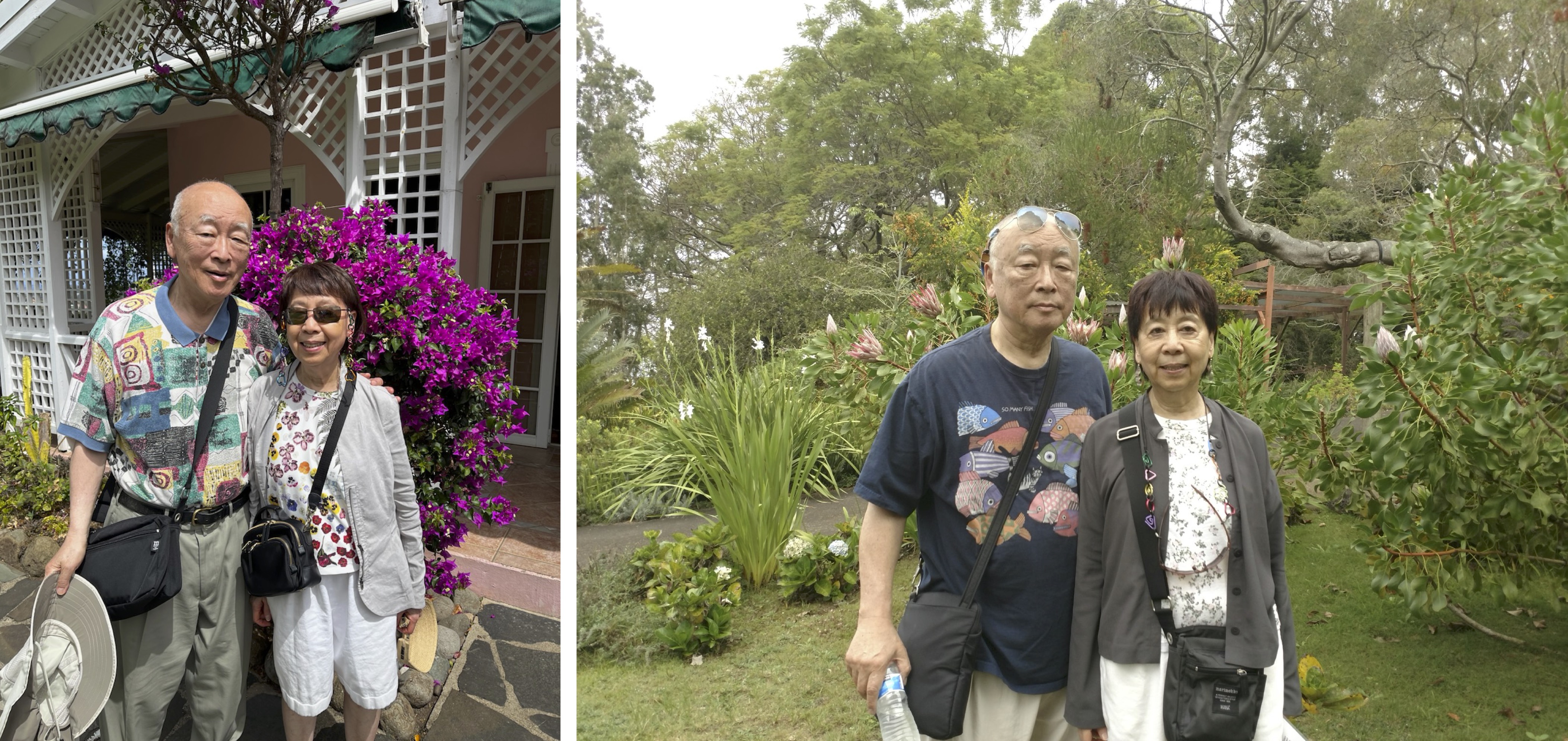
Overall, Lee’s life story serves to demonstrate the power of education to transcend borders and shows that one should not be afraid to take risks in a career, in love, and in life in general. Both he and Bernadette were able to build a successful company and life together in a new country, having left their motherlands behind. He is an inspiration to not just Korean students at Harvard, but to hardworking, motivated students everywhere.
Written by Kaylee Kim (5/30/2024)
[1] This biography is based on an interview of Kyunghoon and Bernadette Lee conducted by Sun Joo Kim on March 15, 2024, in Seattle, WA. We’d like to thank both Kyunghoon and Bernadette for sharing their life story.
[2] For more information on Yi, see “Yi To-yŏng,” in Han’guk minjok munhwa taebaekkwa sajŏn [Encyclopedia of Korean Culture]. https://encykorea.aks.ac.kr/Article/E0044027.
Bibliography
Secondary sources
“Yi To-yŏng,” in Han’guk minjok munhwa taebaekkwa sajŏn [Encyclopedia of Korean Culture]. https://encykorea.aks.ac.kr/Article/E0044027.
The Harvard Korean Alumni Biographies Project and the Project website are copyright © 2024 President and Fellows of Harvard College and/or its licensors. Unauthorized reproduction or distribution is not permitted. Please contact Executive Director Susan Laurence (susan_laurence@harvard.edu) for any concerns or questions.