
Younghill Kang
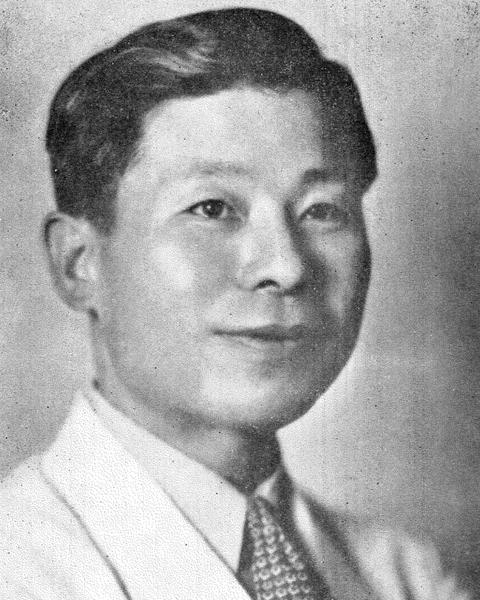
Younghill Kang (Kang Yong-hŭl, 강용흘, 姜鏞訖, 1898?–1972) was an acclaimed and pioneering Korean American writer.
Kang has been credited as the first Korean American novelist and “the Pioneer of Asian American Literature.”[1] His semi-autobiographical novels The Grass Roof (1931) and East Goes West (1937) were well-received upon publication, briefly catapulting him into the limelight. Although after the 1930s, he was never able to replicate his earlier literary success, Kang continues to be considered one of the most influential figures in early Asian American and immigrant literature as his works, particularly East Goes West, have gained renewed interest among Asian American historians and literary scholars.
Many biographies of Kang have been produced already as a result, but there remains much to be uncovered about Kang’s early life. Knowledge of Kang’s early years in Korea and his initial years in America is often informed by his accounts of the life of his alter ego Han Chung-Pa or Chungpa Han (Han Ch’ŏng-p’a) in The Grass Roof and East Goes West.[2] While one can reasonably assume that his novels reflect many of Kang’s actual experiences, the fictional nature of these accounts should make us wary of accepting them as fact (as seen in No Yong Park’s own “autobiography”), and it is also important to not simply reduce the novels as autobiographies, as Walter K. Lew has warned.[3]
Relying on archival materials from Harvard University, this biography will focus on Kang’s early years in the United States, particularly his two-year affiliation with Harvard University as a graduate student, as well as his brief sojourn in Korea as an official in the American Military Government there after World War II.
Kang's Early Life in Korea
Kang’s date of birth has been a topic of much dispute, not helped by Kang himself. Historian and political scientist Bong-youn Choy lists his birth year as 1903, while Walter K. Lew has claimed that Kang was actually born in 1898.[4] Meanwhile, Kang himself listed his birth date as May 10, 1902 in his application to Harvard, but during his earlier sojourn at Dalhousie University, he also reportedly said he was born in May 10, 1899.[5] Events in his life that Kang has recounted in his novels indicates that an earlier birth year is more accurate.[6] Moreover, the fact that Kang attended secondary school at Hamhung Christian Academy from 1913 to 1918 indicates that Kang was born in either 1898 or 1899 instead of 1902.[7]
Kang’s place of birth is also unclear. It has been reported that Kang was born in northern Korea in Hongwŏn County in Hamgyŏng Province.[8] Specifically, according to his autobiographical novel The Grass Roof, Kang grew up in a village called “Song-Dune-Chi” (Songdunji) in Hamgyŏng Province.
In The Grass Roof, through the fictional character “Han Chung-Pa,” Kang seemingly recounts his years in Korea, growing up in northern Korea (in Song-Dune-Chi) in a respected but modest yangban family while having dreams of becoming a great scholar, only for those dreams to be dashed by the annexation of Korea by Japan in 1910 when he was only a child. Despite expressing his disappointment at Korea’s annexation, however, Chung-Pa finds the way of thinking in Korea to be too conservative for his tastes and began to seek a Western education. His extreme dedication to achieving this goal is reflected in his running away from home as a small child and walking 300 miles all the way to Seoul just to receive a Western education against the wishes of his father. In Seoul, however, Chung-Pa is bitterly disappointed by the Japanese government schools there, traveling to Japan to receive a better education. In Japan, Chung-Pa encounters the famous writer Yi Kwang-su (written as Lee Kwang-Soo).[9] After returning to Korea, Chung-Pa attends a Christian high school and then is swept up in the March First Movement that broke out in 1919 in which Koreans demonstrated against and declared independence from Japanese colonial rule.[10] Chung-Pa is arrested and tortured during the brutal Japanese suppression of the movement. After several failed attempts to escape to America—during which he is once again jailed and tortured by the Japanese police—Chung-Pa finally succeeds with the assistance of a Western missionary called Mr. Luther, who was the head principal of the school.[11]
While it is tempting to treat the events in The Grass Roof as accurately reflecting the real events in Kang’s life, it is important to remember that it is a novel, even if it is an autobiographical one. Much of Chung-Pa’s account likely did hue closely to Kang’s own experiences, but there are some episodes in the novel that were fictional. One key example is Kang’s sojourn in Japan, where he attended high school, worked at a shop, and became acquainted with the nationalist movement among Korean students in the country.[12] According to literary scholar Wook-Dong Kim, “no evidence supports that Kang . . . received schooling in Japan” and that “Kang never went to Japan” aside from “a brief stay at Yokohama to take a steamship via Shanghai to Canada in late 1919 or early 1920.”[13] Kang’s application to Harvard also contains no mention of any Japanese school in his previous education.[14]
Indeed, due to a lack of records, Kang’s educational history in Korea is murky. Kang’s time in the Christian high school as described in The Grass Roof was corroborated by a letter from the Canadian missionary Luther L. Young—the “Mr. Luther” in The Grass Roof—to the President of Boston University. Young stated that Kang was a graduate of a Hamhung Christian Academy, in which Kang reportedly “took the full four year course” from 1913 to 1918, with the fifth year from 1917 to 1918 being a teaching year.[15] At Hamhŭng, Kang took a variety of courses including algebra, English, Korean, Japanese, Chinese, Greek, geometry, history, chemistry, physics, geology, botany, zoology, and music.[16] Young also mentioned that Kang taught a year before and two years after graduating.[17] Given that Kang’s Harvard application includes two consecutive years teaching from 1918 to 1920, it would likely mean Kang graduated the Academy in 1918. However, there is confusion as to the exact name of the school, as Kang’s application to Harvard lists the school that he attended from 1916 to 1918 as Youngsaing (Yŏngsaeng Hakkyo), not as Hamhung Christian Academy, although it is possible that the latter was the school’s English name.[18]
In addition, the nature of Kang’s socioeconomic background and his commitment to Korean nationalist causes has become a subject of dispute among scholars of Asian American Studies and literature. Specifically, recent scholarship has criticized the earlier statements made by the Asian American Studies scholar Elaine Kim regarding Kang’s status as “an aristocrat by birth” and his passivity vis-à-vis the Korean independence movement—both of which placed him outside the mainstream of the Korean diaspora in America—which caused Kim to argue that Kang “is not a spokesperson for Asians in America or even for Korean immigrants as critics seem to have classified him.”[19] Walter K. Lew takes issue with Kim’s analysis, which he calls “nativist,” stating that she “accuses Kang of being both inauthentically Korean and politically suspect.”[20] Lew observes that Chung-Pa’s family was one of the impoverished “non-officeholding families in remote villages of northeastern Korea,” a region traditionally discriminated against during the Chosŏn Dynasty.[21] Lew counters Kim’s claim that Chung-Pa’s (and Kang’s) involvement in March First was “peripheral” by noting that The Grass Roof offered “among the most impassioned writing in English” at the time on March First and the brutality of the Japanese suppression.[22] Lew argues that The Grass Roof proved effective in countering Japanese propaganda about Korea as “degenerate” and that Kang was vocally critical of imperialism and authoritarianism in general.[23] Jane Im writes that Kim “misleadingly uses the term ‘aristocrat’ in describing Chungpa’s yangban status,” noting that Chungpa had to discard his yangban privilege in supporting himself, and that Kim greatly downplays Chungpa’s (and Kang’s) commitment to the Korean cause.[24]
At the same time, in The Grass Roof, Chung-Pa’s family, even though certainly not wealthy in objective terms, remained well-respected in the community due to its educated, yangban background, which surely gave Chung-Pa an initial advantage in terms of education, which he leveraged into increasingly advanced education throughout his life. In general, poor yangban households were common in the late Chosŏn period during which the story is set, and it was social status more than material wealth that mattered in the rigidly stratified society of that time. Moreover, as Jane Im acknowledges, “Chungpa/Kang is certainly not a revolutionary,” with Chungpa exhibiting “political apathy and ambivalence regarding the anticolonial Korean liberation movement.”[25] Chungpa/Kang was not unique in his ambivalence toward other Korean nationalists—made repeatedly clear throughout East Goes West—despite his own background as a former participant in a nationalist movement such as the March First Movement, as seen in the example of No Yong Park, who himself publicly proclaimed himself as a Chinese immigrant despite his deep ties to the Korean independence movement. However, as Lew argues, it must still be noted that even patriotic or nationalist Koreans were keen to acquire a Western education.[26]
Younghill Kang’s Arrival in America
Kang made his way to New York via either San Francisco or Vancouver depending on the account, several years before the Immigration Act of 1924 (also known as the Johnson-Reed Act or Asian Exclusion Act) which prohibited immigration from Asia.[27] Upon arrival in New York, Kang reportedly only had four dollars in his pocket.[28]
If East Goes West is anything to go by, we can surmise that Kang struggled to acclimate to American life. In the novel, Kang chronicles Chungpa’s (mis)adventures in trying to find cheap accommodations and work to support himself, first turning to the dysfunctional Korean diasporic community before striking out on his own and taking on a variety of odd jobs, including being a house servant, traveling book salesman, busboy, department store employee, and freelance translator.[29]
Kang’s ultimate goal, of course, was to receive the Western education he had so desperately craved while in Korea. To that end, Kang first attended Dalhousie University in Halifax, Nova Scotia in 1921 before moving to Boston and receiving a Bachelor of Science degree at Boston University (BU) in 1925, where he had originally hoped to study to become a physician.[30] But even at BU, Kang remained focused on English literature, for which he took numerous courses.[31] Early in his stay at BU, where Kang studied from September 1922 to June 1925, Kang was placed on “special probation for unsatisfactory scholarship” in 1923.[32] Kang’s record at BU, however, was mostly satisfactory, if not spectacular, receiving mainly B’s and C’s in his coursework.[33] Ultimately, Kang impressed the faculty there, including President Lemuel Herbert Murlin and the English professor Ebenezer Charlton Black, who would strongly support his application to Harvard’s Graduate School of Education where Kang would pursue a Master’s degree in English education.[34]

Younghill Kang at Harvard
Kang applied to the Harvard Graduate School of Education (HGSE) on June 23, 1925 initially for the Master’s program, although it is possible that he hoped to receive a PhD eventually.[35] The Registrar of HGSE, Miriam F. Carpenter, mentioned in a 1926 letter that Kang had been personally recommended to Harvard by President Lemuel Herbert Murlin of Boston University.[36] Indeed, in 1925, Murlin—by then the president of DePauw University—had sent a letter to the Dean of HGSE, Henry Wyman Holmes, extolling Kang as a “rare young man” who had “maintained a fine Christian spirit toward everybody.”[37] Interestingly, it appears Kang communicated to Murlin a desire to return to Korea at some point to teach there, which served as a motivation to pursue his degree in English Education at Harvard.[38] Murlin also wrote that he had “never known even the most energetic, ingenious, enterprising Yankee” who could compare to Kang in being “so purposeful and unyielding in accomplishing his purposes” and taking advantage of his opportunities.[39] Clearly these words had an impact, as Harvard accepted Kang as a student. Kang enrolled in courses beginning in July 1925.[40]

While it is not possible to confirm Bong-youn Choy’s claim that “Kang was one of the top students in his class in every subject,” transcript records from Boston University and Harvard do show that Kang was a diligent and strong student.[41] Due to his performance as a student as well as his charismatic personality, Kang garnered great interest and praise from faculty and staff at Harvard. The registrar Miriam Carpenter described Kang as “a very unusual person” who had “done highly creditable work in his courses” while “getting some honor grades on papers and other written work with an instructor who has the reputation of marking very hard” despite Kang’s “language handicap” and having to work while studying to support himself financially.[42] In other correspondences, Carpenter added that Kang was “a Korean student of very brilliant mind and an extremely good use of the English language” as well as “likeable and rather naively charming.”[43]
Indeed, what emerges from the Harvard archival materials on Kang is how prominently Carpenter features, acting as his persistent advocate to any potential employers.[44] Based on the numerous letters she wrote, it is clear that she cared deeply for Kang’s well-being and progress at the school—and beyond—and saw much potential in him.[45] For instance, Miriam Carpenter reached out to several tourism companies to ask whether Kang could be hired as a guide for any tours of Asia, although all of the companies refused to hire him due to not operating any tours in Asia.[46] Carpenter wrote to Kang, “If I can help you in any way I want to be sure to do so.”[47] Carpenter also admonished Kang in 1928 for applying to jobs that were beneath his “real capacity.”[48]

Like other Koreans who studied at Harvard in the 1920s and 1930s, Kang continued to be plagued by money troubles during his time at Harvard. Kang did receive a gift in early 1926 that covered one half-year’s worth of tuition (totaling $75 at the time).[49] But Kang was still desperate to get money to finance his studies and had to find ways to support himself. At one point, Kang borrowed $35 from Harvard for additional funds.[50]
In addition, Kang’s dire straits may have caused him to commit plagiarism in at least two of his courses. According to Miriam Carpenter, the professor for one of these courses (surnamed Johnson) reportedly told her that Kang “had handed in a paper with word for word extracts from three reference books” with “no acknowledgment made of the quotation.” While Kang had said that “he did not mean to be dishonest,” he apparently “did not in any way say that he did not understand the significance of what he was doing.” Furthermore, Kang was noted by a classmate to have committed this same act in a different class, indicating that “it was not ignorance on [Kang’s] part.” The classmate did conjecture, however, that Kang’s “financial difficulties and continued hard work had weakened his morale” which led him to commit plagiarism. While the professor intended to “flunk” Kang in the course, he did not pursue the matter as a disciplinary one, and Carpenter sought understanding for Kang and his desperate financial situation.[51]

Kang’s financial difficulties played a direct role in delaying his graduation. Kang’s failure to pay even the diploma fee meant that Kang could not graduate in the summer of 1926 as he had planned.[52] Thus, even though Kang finished his coursework by 1926, it was not until 1927 that he could officially graduate and receive his diploma. Kang eventually received his Master’s degree in Education from Harvard on February 1927.[53] In addition, Kang’s hopes to continue to the PhD were dashed by the faculty at HGSE, who reportedly “did not give [Kang] a scholarship because [they] felt it was better for him to go out and get experience rather than to go on for his doctorate work at this moment.”[54]
As noted above, Kang’s original plan appears to have been to return to Korea as soon as he received advanced education in the United States. Moreover, Kang did contact Chosen Christian College (CCC; the forerunner to Yonsei University) in 1926 about the possibility of obtaining a teaching position there.[55] He either was unable to secure it, or chose not to pursue it, as Kang moved to Philadelphia in 1926 and worked at the Gimbel Brothers department store.[56] Kang also apparently had previously told Carpenter that he was “only delaying [his] departure until [he] had paid up [his] debts” at Harvard.[57] But Kang clearly changed his mind somewhere down the line.
After Harvard
Kang stayed in the United States after graduating from Harvard and moved to New York again. He attained numerous positions after his graduation, becoming assistant professor of comparative literature at New York University (NYU), working as a curator of Asian art at the Metropolitan Museum of Art, and even working for the Encyclopædia Britannica.[58]
At NYU, where he started working in 1929, Kang taught courses such as “Literature of the Far East,” “Oriental Influences on English Literature,” and “Comparative Literature.”[59] It was at NYU that Kang met the novelist Thomas Wolfe, who became an enthusiastic supporter and promoter of Kang’s own writings.[60] In fact, Wolfe played a crucial role in getting Kang’s first novel The Grass Roof published by both introducing several of Kang’s chapter manuscripts to the renowned editor Maxwell Perkins as well as writing a glowing review of Kang’s book, calling Kang “a born writer.”[61] Wolfe’s recommendation was also instrumental in Kang winning the prestigious Guggenheim Fellowship for creative writing in 1933.[62] Kang would later return the favor by bringing attention to Wolfe’s works to Korean audiences in the 1940s through Korean-language articles written for popular postliberation magazines such as Minsŏng (Voice of the People) and Sinch’ŏnji (New World).[63]
Sometime after Kang’s graduation from Harvard, he married Frances Stacy Keely. A Korean news article from 1970 stated that Kang met Keely in 1929 while she was a student at New York University.[64] An announcement in the Korean Student Bulletin in October 1929 also mentioned the marriage of Kang to Keely.[65] A chronology of Kang’s life in the 2019 edition of East Goes West, by contrast, states that Kang was already engaged to Keely by 1928, marrying her that same year, and that Keely was in fact a graduate of Wellesley College.[66] Due to anti-miscegenation laws, Keely’s marriage to Kang meant that she lost her American citizenship as well.[67] With Keely, Kang had three children: daughter Lucy Lynn and sons Christopher and Robert.[68]
Literary Success: The Grass Roof and East Goes West
Kang also embarked on a writing career after his graduation from Harvard. His output included English translations of Korean, Chinese, and Japanese poetry, which he published in 1929 with his wife; this was noted in the Tonga ilbo (East Asia Daily) in early 1930.[69] Moreover, from October 1929 until May 1930, Kang became a contributing editor for The Korean Student Bulletin, a student-run Christian newspaper that characterized itself as the “Official Organ of the Korean Student Federation of North America,” and in which Kang published several of his poetry translations.[70]
But it was his two major novels, The Grass Roof (1931) and its sequel East Goes West (1937), that established his reputation as one of the pioneers of Asian American literature.[71] The Grass Roof has continued to be of interest to Korean academics regarding Kang’s portrayal of Korea to a Western audience, while Kang’s later novel East Goes Westhas been considered a foundational text among scholars of Asian American literature as one of the earliest and most detailed depictions of Asian immigrant life as well as its interrogation of Asian Americans’ complex position in the racial hierarchy in American society.
The Grass Roof, which Jane Im describes as a “pastoral novel of Korean country life and its ensuing Japanese colonization,” gained widespread praise upon its publication.[72] In one sense, the positive responses to The Grass Roofwere driven by the sense of discovery of the exotic in Korea; as Elaine Kim writes, “critics seem to have admired Kang’s writing for the information about Korea that it contains and for its very uniqueness as the work of a representative from a nation about which little was known.”[73] For example, a reviewer in the Guardian treated the book less as a novel and more as a book about Korea and Asia as a whole, stating that “Western people who want to know more of what has been happening morally and mentally in the Far East and to understand what is still potent in the old civilisations should read” the book, which purportedly answered the question, “What is the real difference between a Chinese, a Korean, and a Japanese?”[74]
Some reviewers like Lewis Gannett, however, also found in The Grass Roof a fundamentally American story. While adding to the chorus of reviews highlighting the book’s value in illustrating life in Asia from an Asian perspective by stating, “Americans will hear in its best pages the music of Oriental pine trees swaying over curly-eaved temples,” Gannett also noted convergences with American narratives. He stated that American readers would be drawn to the book “because we like to read of the struggles for liberty in far lands; because we are romanticists, and the story of a boy, born under a grass roof and now one of us, wearing our Western hats, shoes and neckties, belongs to an Alger tradition that we still love,” referring to the Horatio Alger formula of individual persistence in self-improvement and success.[75]
There was also a note of condescension in reviewers’ evaluation of Kang’s writing style. Regarding Kang’s occasional awkward phrasing in English, Lady Hosie stated that “a few unconscious jerks and jars of very modern American slang only add naivety to the candor of his tale.”[76] The Guardian’s review noted that the book featured “English of an odd kind, no doubt, often beautiful, often bizarre, but still adequate to the author’s frank purpose.”[77] In her review of the book in the New York Herald Tribune, the Sinologist and writer Florence Ayscough cautioned Kang against relying on English words like “utopia” and “cowboy” which she argued had imagery specific to Western phenomena and seemed ill-suited to describe anything in Korea, and also implored him to “write more books for us about his people, to translate more of their charming poems and to use terms which will always suggest as definitely as possible the ‘Land of the Morning Calm.’”[78]
Meanwhile, Kang’s publication of The Grass Roof was noted in the Korean press, with the Tonga ilbo commenting that this was the first English-language novel about Korea by a Korean.[79] In this 1930 article, the Korean translation of the title was initially rendered as Ch’oga chibung (The Thatch-Roofed House), but the 1948 Korean translation of the novel settled on the title of Ch’odang (The Thatched Cottage).[80] In addition, the noted writer Yi Kwang-su wrote a review of the book, praising the lively nature of the book while criticizing Kang’s knowledge of Korea as being “shallow” (ch’ŏnbak).[81] Among the Korean American community, the book and Kang’s success were points of pride, with the Korean Student Bulletin highlighting the universal praise the book received from critics.[82]
If the Grass Roof was universally acclaimed by contemporaneous critics for introducing American audiences to the then-unknown and seemingly exotic culture and society of Korea, East Goes West, which changed setting from Korea to the United States, received a more muted reaction upon its publication given its critical take on American society and the reality of the “American Dream” for immigrants.
Initial positive reviews of East Goes West, according to Elaine Kim, focused on “what they saw as sustained optimism in the face of difficulties caused by racism and discrimination in America,” with one New Yorker review characterizing the plot as a “successful search for the formula that was to make [Chungpa/Kang] an ‘Oriental Yankee.’”[83] Indeed many reviewers seem to not have caught onto the biting satire that Kang offered in this latter novel. In fact, one initial review mistook East Goes West as an autobiography rather than a novel. Writing in 1937 in The New York Times, Katherine Woods stated that “of course, ‘East Goes West’ is not a novel” but instead “a candid record of ‘the making of an Oriental Yankee.’” Woods even appeared to believe that Chungpa Han was not a fictional character but actually Kang’s real name, writing that Kang was “born Chungpa Han thirty-four years ago in a Korean village.” Woods declared that Kang “has been so successfully Americanized as to become” an NYU professor and an employee of the Metropolitan Museum of Art. Finally, Woods characterized Chungpa/Kang as “no cynic”—a protagonist who “does not linger over such incidents and observations” that befall him—and failed to make any mention of Chungpa/Kang’s continuous struggles to fit into American society due to his status as an immigrant and racial minority.[84]
However, later analyses of the book have discussed how the book shows exactly the opposite. As Kyhan Lee argues, “East Goes West is ultimately not about dreams realized but about dreams deferred,” the failure to achieve the “American dream” as a racial minority immigrant.[85] Kun Jong Lee observes that East Goes West offers a satirical twist to the “Benjamin Franklin” model of American success, which Kang shows is out of reach for ethnic minorities including both Koreans and African Americans.[86] Various characters in the novel lament their liminality, unable to truly feel like they belong to one world or another (i.e., Korea and America).[87] Kang’s observations of a “crystallized caste system” in America surely show his awareness and disapproval of the racial dynamics in the country, which make one wonder how such features of the book could have elided early reviewers.[88]
Indeed, to later analysts of Asian American literature, it is precisely the infusion of Kang’s observations and critiques about the racial dynamics in the United States, as well as the rich descriptions of the difficulties of immigrant life, that has made East Goes West a popular topic of study. There have been far more studies of Kang’s later book in the English language than his first one as a result.
Commentators on Kang and his literary output have often discussed what his works reflect about the difficulties of assimilation and acceptance that Asian immigrants to America endured, no matter their profession. Kyhan Lee states that “early intellectual Korean immigrants experienced the same cultural barriers and discrimination that had denied the first labor immigrants true entry into the American society,” noting that “the lives of these ‘refugee students’ were anything but pleasant” due to their having to work in a variety of manual labor jobs even while going to school.[89]
Kang’s exploration of Asian immigrants’ liminal position between the poles of white and Black Americans has especially garnered much attention, with recent scholarship noting Kang’s subversive arguments that placed Asians in solidarity with African Americans against white hegemony.[90] Moreover, the doomed romances between Korean men and white American women—i.e., Chungpa with “Trip,” who was modeled after his wife Frances Keely; George Jum with June, an entertainer who used blackface during her shows in Harlem; To Wan Kim, a Korean expatriate intellectual, with Helen, a member of an established New England family—also have attracted scholarly analysis of the intersectionality of race and gender, locating Kang’s portrayal of these relationships within a tradition of immigrant literature that allegorizes white women as symbols of assimilation into mainstream white American life.[91]
Younghill Kang’s Citizenship Appeal
As an Asian immigrant, Kang was legally denied any pathway to becoming an American citizen. But this did not prevent Kang and others from desperately wanting to become citizens. With Kang’s celebrity status after the publication of his two major novels, his cause for citizenship gained momentum after a push from his allies in American literary and academic circles.
Kang’s citizenship appeal even reached Washington as two bills that exclusively sought to facilitate Kang’s American citizenship were introduced in Congress in 1939. These were H. R. 7127 and S. 2801, sponsored by Illinois Representative Kent E. Keller and West Virginia Senator Matthew M. Neely, respectively.[92] The text of H. R. 7127 read as follows:
A bill to make Younghill Kang eligible for naturalization. Be it enacted by the Senate and House of Representatives of the United States of America in Congress assembled, That notwithstanding any provision of law imposing racial limitations on eligibility for citizenship, Younghill Kang, of New York, New York, a resident of the United States for almost twenty years and lawfully admitted to the United States, may become naturalized as a citizen of the United States upon compliance with all provisions of the naturalization laws, except that no period of residence shall be required after filing of declaration of intention.[93]

As a result of his fame, Kang received numerous endorsements from various high-profile figures in literature, journalism, and academia in his citizenship case. Many of these endorsements can be found in a booklet published by an organization dedicated to Kang’s citizenship case, called the Committee on Citizenship for Younghill Kang, based in New York City. Among those who expressed their support for Kang’s citizenship in the pamphlet included Roger Baldwin, the director of the American Civil Liberties Union; the scholar and critic Lewis Mumford; the journalist Max Lerner; and the writer Pearl Buck. Representative Keller’s extensive advocacy of Kang was featured at the beginning of the pamphlet, in which he wrote that Kang “was Korean to the core, but he was American more so” and urged for an exception to the ban on citizenship by Asian immigrants be made for Kang. The pamphlet also included glowing reviews of Kang’s works by illustrious writers such as H. G. Wells, Thomas Wolfe, Lewis Mumford, and Rebecca West to boost his citizenship case.[94] Kang also appealed to his connections at Harvard for their recommendations as well. The Dean of HGSE Henry W. Holmes duly submitted a letter to Congress in 1939 in support of his citizenship, emphasizing Kang’s “excellent record” in school as well as his notable career.[95]
Unfortunately for Kang, both legislative bills were defeated. However, Kang was eventually able to obtain citizenship in 1952 after the passage of the McCarran-Walter Act (formally known as the Immigration and Nationality Act) that year which loosened immigration and naturalization restrictions for people from Asia (although establishing strict quotas that capped total immigration from the Asian-Pacific Triangle at 2,000).[96]

Younghill Kang in Korea
During World War II, Kang worked as a language consultant to the Army Education Division.[97] After the war’s end, Kang returned to Korea, being appointed Chief of Publications for the United States Army Military Government in Korea (USAMGIK) and Political Adviser to the Director of the Office of Civil Information in Korea.[98]
Kang’s return was celebrated in Korea given his literary reputation which had garnered him fame in Korea as well.[99]Kang served as an advisor to the Patriotic Culture Company (Aeguk Munhwasa) whose mission was to boost Koreans’ patriotic spirit and allow Koreans to discover their national selves.[100] Kang also worked as a professor at Seoul National University until 1948.[101]
In addition to participating in multiple cultural activities in his former homeland, Kang also was not shy about making his opinions heard regarding the volatile political situation in the southern occupation zone that the Americans governed. In particular, Kang became a firm opponent of the eventual first president of South Korea, Syngman Rhee (1875–1965; President from 1948–1960). According to Rhee’s confidante and biographer Robert T. Oliver, Kang reportedly stated upon his arrival to Korea, “I don’t like and don’t trust Dr. Rhee. He’s a politician, and I despise all politicians, Koreans or Americans. I’m a writer, an artist. Artists have no interest in the squabbles of materialistic politicians.”[102]
The longer Kang stayed in the country, his negative views of Rhee as well as Korean conservatives persisted, which he expressed in a long report for USAMGIK called “General Criticisms of Thinking Koreans Regarding American Military Government.”[103] Kang was scathing in his critique of continuities in wealth and power by Korean collaborators with the Japanese, naming businessman Pak Hŭng-sik, educator and conservative politician Kim Sŏng-su, educator Paek Nak-chun, and politician Chang Tŏk-su as four of the biggest culprits who were beneficiaries of the American occupation despite their collaborationist pasts.[104] Kang criticized the Korean police, who worked closely with right-wing parties led by Syngman Rhee and Kim Ku, as being “just as bad” as the Japanese colonial police and lamented the fact that “all left wingers and liberals are labeled as communists” and were persecuted as a result.[105] Kang evaluated Marxist economic historian Paek Nam-un highly, noting that Paek “wrote the greatest book on economics of Korea.”[106] Kang also asserted that many qualified people were not being consulted by the occupation, and instead, “men who have no business in government” such as “curious characters who have been preachers, mission school teachers, traveling salesmen, real estate men” and so forth were “occupying the key positions.”[107]
The American authorities were little better, in Kang’s estimation. He contemptuously wrote, “Many responsible American officials are nothing but a bunch of amateurs when the situation calls for professional experts and trained technicians. For instance, a dishwasher in the States comes over to Korea as a WD civilian employee and becomes a dean of the university or a village preacher in America becomes a university president in Korea.”[108] This was a criticism that pertained also to the American occupation of Japan. As historian John Dower observes, many ordinary American military and civilian personnel in Japan wielded enormous power because of their role in administering the occupation, power that also translated into luxurious lifestyles far surpassing their normal station.[109]
Kang also bemoaned the ignorance of Americans about Korea. He called for American personnel to be required to learn about Korean history and culture. He also called for a general book on Korea to be published, for use for both American occupation personnel as well as in the United States. He also recommended translating Korean novels, plays, and poetry into English for American audiences.[110] Kang also urged the American authorities to cultivate Korean artists and to support importation and translations of Hollywood films in Korea.[111]
Other criticisms Kang included were about the lack of sustained and genuine contacts between Koreans and Americans, with the latter often proving aloof when interacting with Koreans. As a writer, Kang was especially sensitive to the Americans’ lack of support to Korean artists and writers, many of whom left for the north as a result.[112] Kang noted that being called “pro-American” had become just as much an insult as the label of “pro-Japanese,” on both the Right and Left—a far cry from when Americans had been greeted as liberators upon landing in Korea in September 1945.[113]
The solution Kang offered in improving the American occupation was as follows: “America should develop a new spirit, a new morale, a new atmosphere, and a new feeling for Korea. We must make the Koreans feel that they are a free and liberated people, not slaves under a master. We must be definite in our policy. We must not say one thing and do something else.”[114] Specifically, Kang recommended that the corrupt police system be revamped—he called the director of the national police Cho Pyŏng-ok a “rascal and wicked” and the Seoul police chief Chang T’aek-sang as a “vicious” man—and to jail politicians such as Kim Ku and Syngman Rhee for their role in causing the assassinations of Song Chin-u and Yŏ Un-hyŏng.[115] Kang was especially incensed at Yŏ’s murder, which had occurred only a couple months before in July 1947, and accused Kim, Rhee, and Chang and their allies of conspiracy. Kang warned that if the police system and political situation continued without any changes to them, the conservative Korean Democratic Party would take control and create a “dictatorial fascist” regime; “Korea will be like Germany under Hitler, Italy under Mussolini.”[116] Given that they had gone “to war to kill the totalitarian states,” the Americans could not “afford to create one right here in Korea.”[117] Kang urged the Occupation authorities to promote the moderates instead of the Rhee and Kim Ku factions while also avoiding the temptation to withdraw from Korea altogether, which would lead to the communization of the peninsula, an equally bad outcome in Kang’s view.[118]
Kang also criticized the economic situation in Korea in which “the only well fed and well dressed Korean men are profiteers and their associates who are leaders of the reactionary political parties.”[119] Kang recommended a thorough survey of Korean economic and industrial conditions. He also urged immediate and extensive land reform.[120]
Opinions on Kang’s report were divided. Joseph E. Jacobs, who was the Political Adviser in Korea (PolAd), said that Kang’s report was “interesting but the author expects too much of any occupying troops and authorities even if the situation in Korea were better than it is.” Jacobs added that Kang’s criticisms made him come off as “a bit ‘pink,’” meaning that he sounded like a communist.[121] Meanwhile, another official, likely Arthur C. Bunce, who was the economic adviser to General Hodge, said that Kang’s report “contains many good suggestions which could be followed up and many charges which could be investigated,” and that while “Polad’s remarks have some truth to them,” he questioned Jacobs’s use of “pink” to describe Kang, since the word “is too often used as a label for anyone we disagree with and also as an excuse for doing nothing.”[122]
Due to his work with the American Military Government, Kang befriended Leonard M. Bertsch, a political advisor to USAMGIK who was a keen observer and player in postliberation Korean politics. Kang and Bertsch kept in touch long after both had left Korea, with Bertsch calling their relationship an “old and close friendship.”[123] Kang and Bertsch clearly maintained their dislike for Rhee well into the 1950s. In a letter addressed to Kang, Bertsch wrote how “the ugly old walrus”—referring to Rhee—“gets a much better break from the American Press than he deserves,” indicating Bertsch’s comfort at insulting the South Korean president in confidence with Kang.[124]
Kang continued to express his dislike of Rhee long after his departure from Korea. In the foreword to Bong-youn Choy’s 1971 book Korea: A History, Kang criticized the “corruption and mismanagement” in South Korea of the billions of dollars in American aid during the 1950s—clearly a reference to the Rhee administration—and later more explicitly called Rhee an “ousted dictator.” Indeed, Kang devoted the bulk of his Foreword to describing Rhee’s persecution of his enemies and decrying how his rule of twelve years “was long enough to ruin the careers of many Koreans in America for life.”[125]
Kang’s Return to America and Later Life
Kang would return to the United States, presumably upon the end of the American military occupation in 1948. According to Bong-youn Choy, Kang was “actively engaged in opposing racism and other anti-democratic social forces” in both Korea and America, being a strong critic of both Rhee and U.S. Senator Joseph McCarthy, while also working “for the protection of minority rights in America” as a member of the American Civil Liberties Union.[126] Joseph E. Jacobs’s comment above about Kang being “pink” presaged Kang’s later persecution for his resolute stance against authoritarianism in both Korea and the United States, as Kang was reportedly accused of having communist sympathies and put under surveillance by the American government.[127] Perhaps as a result of this anticommunist mood that cast suspicion on his politics, Kang was never able to follow up on his initial literary success, not publishing any novels after East Goes West.[128]
He did, however, turn to playwriting. Murder in the Royal Palace, originally titled King Kongmin, was a four-act play that Kang wrote in the early 1960s, of which there remain only two extant copies.[129] The play, set during the last years of the rule of King Kongmin of Koryŏ (r. 1351–1374), revolved around the power struggle to determine succession to the throne, featuring prominently the machinations of Kongmin’s advisor, the Buddhist monk Sin Ton (1322–1371) whose dharma name was Pyŏnjo (rendered as Pyonjo in the play), who sought to manipulate the succession for his own benefit.[130] Kang’s antipathy toward Rhee is said to have influenced Kang’s framing of Murder in the Royal Palace. Wook-Dong Kim argues that this play, while ostensibly about the declining years of King Kongmin, was also a “political allegory” of Rhee’s rule. Kim finds parallels between Kongmin’s ineffectiveness and reliance on Pyŏnjo and Rhee’s advanced age at the end of his rule—having reached 85 years of age in his final election in 1960—and reliance on Yi Ki-bung.
Murder in the Royal Palace was performed as a one-act play in New York and Pennsylvania in October 1964.[131] He later expanded it into the final four-act version. When visiting Korea in 1970, Kang gave the play to Gunsam Lee (Yi Kŭn-sam), who later translated it into Korean in 1974.[132] The abridged translated play was performed in South Korea that same year in March by the Minye Kŭkchang (Folk Arts Troupe), although the show closed after only five days due to poor reviews and external pressure from the powerful Buddhist Chogye Order, who denounced the play’s unfavorable portrayal of Buddhism through the portrayal of the antagonist Pyŏnjo.[133]
Although fading into literary obscurity in his later life, Kang remained a regular feature of the lecture circuit, like No Yong Park.[134] Wook-Dong Kim writes that Kang “traveled from one speaking engagement to another in an old Buick, leaving some Rotary Club audiences spellbound with his recitations of Hamlet’s famous soliloquy and with his lectures on East Asian countries, including Korea.”[135] Kang’s continued love of recitation was clearly on display during a radio interview with Studs Terkel in 1966.[136]
Kang continued to receive attention in Korea. Kang returned to Korea with his wife Frances Keely in 1970 to attend the 37th International PEN Congress in Seoul.[137] During his stay in Seoul, Kang also received an honorary doctorate (myŏngye paksa hagwi) from Korea University, partially fulfilling his childhood goal of becoming a paksa.[138] Around this time, Kang donated fifteen thousand books from his private library to Korea University.[139]
Just as with his date and location of birth, Kang’s location and time of death are uncertain. But numerous news reports from Korea indicate that Kang died on December 11, 1972, in Melbourne, Florida.[140] Korean newspapers celebrated Kang’s accomplishments as a Korean writer in America. The journalist Song Chi-yŏng called Kang a writer about whom “we [Koreans] are so proud” (charangsŭrŏun chakka), while the playwright Sŏ Hang-sŏk wrote of Kang as an “Eastern star that had gone to the West” who displayed the “wisdom of the East” (Tongbang ŭi yeji), whose “resplendent achievements were shining throughout the world.”[141]
Written by Sungik Yang, 6/3/2023
Endnotes
[1] Soojin Chung, “Kang Younghill, the Pioneer of Asian American Literature,” Boston University School of Theology: Boston Korean Diaspora Project. Accessed June 27, 2022. https://sites.bu.edu/koreandiaspora/individuals/boston-in-the-1920s/younghill-kang-the-pioneer-of-asian-american-literature/.
[2] Kang spells it as “Chung-Pa” in The Grass Roof but as “Chungpa” in East Goes West.
[3] Walter K. Lew, “Grafts, Transplants, Translation: The Americanizing of Younghill Kang,” in Modernism, Inc.: Body, Memory, Capital, ed. Jani Scandura and Michael Thurston (New York; London: New York University Press, 2001), 173.
[4] Bong-youn Choy, Koreans in America (Chicago: Nelson-Hall, 1979), 281; Lew, “Grafts, Transplants, Translation: The Americanizing of Younghill Kang,” 171.
[5] “Application for Admission to the Graduate School of Education, June 23, 1925,” in Student folder of Younghill Kang. Harvard Graduate School of Education, Registrar’s Office - Student folders. UAV 350.284 Box 344. Harvard University Archives (hereafter “Student folder”), p. 24; Lew, “Grafts, Transplants, Translation,” 171.
[6] If it is true that Kang refused to marry his “appointed bride” at the age of eighteen as he wrote in East Goes West, it would mean that several years would have had to pass between then and his arrival in America in 1921, during which time he traveled to Japan and participated in the March First Movement. Thus, an earlier birth year in the late 1890s would make more sense. See Younghill Kang, East Goes West: The Making of an Oriental Yankee (New York: Penguin Books, 2019), 8.
[7] “Transcript of Secondary School Record, Boston University College of Liberal Arts,” Student folder, p. 34.
[8] Lew, “Grafts, Transplants, Translation,” 171; “‘Ch’odang’ ŭi chae Mi chakka Kang Yong-hŭl ssi pyŏlse” [Korean American author of The Grass Roof Younghill Kang passes away], Tonga ilbo, December 16, 1972.
[9] Younghill Kang, The Grass Roof (New York: Charles Scribner’s Sons, 1931), 244.
[10] Kang provides an English translation of the Korean Declaration of Independence. At the end, Kang names the author as “Six Grass Roofs,” which he notes is the “pen-name of the greatest historian and scholar of Korea.” See Kang, The Grass Roof, 331–334. Clearly this is a reference to “Yuktang” (六堂), or Six Houses, the pen-name of the historian Ch’oe Nam-sŏn, the author of the Declaration.
[11] Kang had several contacts with prominent Western missionaries. In The Grass Roof, Chung-Pa assists “the wife of the well-known pioneer missionary to Korea” in translating John Bunyan’s The Pilgrim’s Progress into Korean after his graduation from the school, which is a reference to Kang’s real-life experience in helping Lillias Horton Underwood, the wife of the prominent Presbyterian missionary Horace G. Underwood, in the same endeavor. See Kang, The Grass Roof, pp. 327–328; Wook-Dong Kim, Global Perspectives on Korean Literature (Singapore: Springer Singapore Pte. Limited, 2019), 137.
[12] Kang, The Grass Roof, 230–287. In the novel, Chungpa meets the nationalist figure Ch’oe P’al-yong (written as Choi Pal-Yong) in Japan. See Kang, The Grass Roof, 251.
[13] Wook-Dong Kim, Global Perspectives on Korean Literature, 137. Kim points to Kang’s “ignorance of Japan,” such as his detailing of Chungpa sailing to Pusan from Nagasaki despite the fact that “all the ships bound for Pusan departed at Shimonoseki, not Nagasaki” as Kim observes, as further proof that Kang never studied in Japan. See Wook-Dong Kim, Global Perspectives on Korean Literature, 137. Another historical anachronism is Chung-Pa’s repeated references during and after March First to Terauchi Masatake as the Governor-General, but Terauchi had already ended his tenure as Governor-General in 1916, three years before the March First Movement.
[14] “Application for Admission to the Graduate School of Education, June 23, 1925,” Student folder, p. 24.
[15] “Luther L. Young to the President of Boston University, May 7, 1925,” Student folder, p. 32. For a record of the years Kang spent at Hamhung, see “Transcript of Secondary School Record, Boston University College of Liberal Arts,” Student folder, p. 34. For the information about Luther Young, see Wook-Dong Kim, Global Perspectives on Korean Literature, 136. The account of Kang’s (as “Chung-Pa”) time at the Christian school as well as his years teaching in Korea are found in Kang, The Grass Roof, 310–327.
[16] “Transcript of Secondary School Record, Boston University College of Liberal Arts,” Student folder, p. 34.
[17] “Luther L. Young to the President of Boston University, May 7, 1925,” Student folder, p. 32. Young also mentioned that the school building had been burned in 1919—possibly as a result of Japanese suppression campaigns during the March First Movement—which destroyed all school records.
[18] “Application for Admission to the Graduate School of Education, June 23, 1925,” Student folder, p. 24. Wook-Dong Kim also mentions that Kang graduated from Youngsaing High School located in Hamhŭng. See Wook-Dong Kim, Global Perspectives on Korean Literature, 137. For more on Youngsaing, see “Yŏngsaeng Hakkyo,” Han’guk minjok munhwa taebaekkwa sajŏn [Encyclopedia of Korean Culture]. https://encykorea.aks.ac.kr/Article/E0037453 (accessed April 27, 2023).
[19] Elaine Kim, “Searching for a Door to America: Younghill Kang, Korean American Writer,” Korea Journal, Vol. 17, No. 4 (April 1977): 39, 46.
[20] Lew, “Grafts, Transplants, Translation,” 175.
[21] Lew, “Grafts, Transplants, Translation,” 176. For more on discrimination faced by northerners, see Sun Joo Kim, Marginality and Subversion in Korea: The Hong Kyŏngnae Rebellion of 1812 (Seattle: University of Washington Press, 2007); Sun Joo Kim, Voice from the North: Resurrecting Regional Identity through the Life and Work of Yi Sihang (1672–1736) (Stanford: Stanford University Press, 2013).
[22] Elaine H. Kim, “Searching for a Door to America,” 39; Lew, “Grafts, Transplants, Translation,” 177.
[23] Lew, “Grafts, Transplants, Translation,” 177.
[24] Jane Im, “Allusion, Quotation, and Pastiche in Younghill Kang’s The Grass Roof and East Goes West,” Studies in the Novel, Vol. 52, No. 3 (Fall 2020): 310.
[25] Im, “Allusion, Quotation, and Pastiche,” 309.
[26] Lew, “Grafts, Transplants, Translation,” 176.
[27] Bong-youn Choy writes that Kang first went to San Francisco, while in East Goes West, Kang mentions sailing to Vancouver from Asia, then traveling to Halifax, and then taking a ship to New York. See Choy, Koreans in America, 281; Kang, East Goes West, 5. In addition, it is unclear in which year specifically that Kang arrived in the United States, although Kang writes he “got in just in time, before the law against Oriental immigration was passed.” See Kang, East Goes West, 5. Given that he participated in the March First Movement in Korea and records show him leaving Dalhousie University in 1921, it is likely Kang arrived in America in either 1920 or 1921. Kyhan Lee states that the year Kang landed in the United States was 1921. See Kyhan Lee, “Younghill Kang and the Genesis of Korean-American Literature,” Korea Journal, Vol. 31, No. 4 (December 1991): 68.
[28] Kang, East Goes West, 9.
[29] Bong-youn Choy also writes that Kang worked as a waiter, dishwasher, and grocery worker. See Choy, Koreans in America, 281.
[30] “Application for Admission to the Graduate School of Education, June 23, 1925,” Student folder, p. 24; Wook-Dong Kim, Global Perspectives on Korean Literature, 127; Soojin Chung, “Kang Younghill, the Pioneer of Asian American Literature.”
[31] “Transcript of Record for Younghill Kang, Boston University College of Liberal Arts,” Student folder, p. 30.
[32] “Transcript of Record for Younghill Kang, Boston University College of Liberal Arts,” Student folder, p. 31. Kang was later removed from probation in November 1923.
[33] “Transcript of Record for Younghill Kang, Boston University College of Liberal Arts,” Student folder, p. 30. For the years of Kang’s stay at Boston University, see “Certificate of Collegiate and University Study, Boston University,” Student folder, p. 33.
[34] “Letter from Miriam Carpenter to Brewer Eddy, March 19, 1926,” Student folder, p. 55; “Letter from Miriam Carpenter to H. A. Watt, December 28, 1928,” Student folder, p. 92.
[35] “Application for Admission to the Graduate School of Education, June 23, 1925,” Student folder, p. 24. Miriam Carpenter mentioned in a letter in 1926 that “[Kang] will probably eventually get a Doctor’s degree from this School.” See “Letter from Miriam Carpenter to Reeve Chipman, January 27, 1926,” Student folder, p. 45.
[36] “Letter from Miriam Carpenter to Brewer Eddy, March 19, 1926,” Student folder, p. 55.
[37] “Letter from Lemuel Herbert Murlin to Henry Wyman Holmes, June 17, 1925,” Student folder, p. 38.
[38] “Letter from Lemuel Herbert Murlin to Henry Wyman Holmes, June 17, 1925,” Student folder, p. 39.
[39] “Letter from Lemuel Herbert Murlin to Henry Wyman Holmes, June 17, 1925,” Student folder, p. 40–41.
[40] “Letter from the Dean, August 16, 1926,” Student folder, p. 66.
[41] Choy, Koreans in America, 282; “Application for the Degree of Master of Education, January 14, 1926,” Student folder, p. 26.
[42] “Letter from Miriam Carpenter to Brewer Eddy, March 19, 1926,” Student folder, p. 55.
[43] “Letter from Miriam Carpenter to Reeve Chipman, January 27, 1926,” Student folder, p. 45.
[44] Carpenter also wrote Kang a letter of recommendation for a scholarship in 1927. See “Letter from Miriam Carpenter to Paul Monroe, November 29, 1927,” Student folder, p. 79.
[45] Kang also recognized Carpenter’s kindness and expressed his gratitude in a letter to her in 1927. See “Letter from Younghill Kang to Miriam Carpenter, January 16, 1927,” Student folder, p. 70.
[46] “Letter from Miriam Carpenter to Reeve Chipman, January 27, 1926,” Student folder, pp. 45–46; “Letter from Miriam Carpenter to Raymond and Whitcomb, February 5, 1926” Student folder, p. 49; “Letter from Miriam Carpenter to Thomas Cook and Son, February 5, 1926,” Student folder, p. 50. For the companies’ responses, see “Letter from Reeve Chipman to Miriam Carpenter, January 28, 1926,” Student folder, p. 47; “Letter from E. W. Dawson to Miriam Carpenter, February 6, 1926,” Student folder, p. 51; “Letter from Lauriston Ward to Miriam Carpenter, February 17, 1926,” Student folder, p. 53.
[47] “Letter from Miriam Carpenter to Younghill Kang, June 19, 1926,” Student folder, p. 63.
[48] “Letter from Miriam Carpenter to Younghill Kang, February 2, 1928,” Student folder, p. 82.
[49] “Letter from Miriam Carpenter to Younghill Kang, January 22, 1926,” Student folder, p. 44.
[50] “Letter from Miriam Carpenter to Younghill Kang, April 17, 1926,” Student folder, p. 57.
[51] “Letter from Miriam Carpenter to Irvin C. Poley, June 15, 1926,” Student folder, pp. 59–60. All of these quotes are by Carpenter, not by Johnson or Kang directly.
[52] “Letter from Henry W. Holmes to Younghill Kang, July 29, 1926,” Student folder, p. 64.
[53] “Application for the Degree of Master of Education, January 14, 1926,” Student folder, p. 27. See also “Certificate, Harvard Graduate School of Education, October 19, 1929,” Student folder, pp. 96–97.
[54] “Letter from Miriam Carpenter to Irvin C. Poley, June 15, 1926,” Student folder, p. 60.
[55] “Letter from O. R. Avison to Miriam Carpenter, June 1, 1926,” Student folder, p. 61. Oliver R. Avison, the president of the CCC, asked Carpenter about Kang’s ability and character, to which Carpenter responded with characteristically glowing language about Kang, describing him as “a very able student” and “a delightful young man” of “real courage, much sweetness of disposition, and high moral purpose.” See “Letter from Miriam Carpenter to O. R. Avison, June 4, 1926,” Student folder, p. 62.
[56] “Letter from Younghill Kang to Miriam Carpenter, January 16, 1927,” Student folder, p. 70.
[57] “Letter from Miriam Carpenter to Younghill Kang, January 24, 1927,” Student folder, p. 72.
[58] Choy, Koreans in America, 282; Ed Park, “Like No One They’d Ever Seen,” The New York Review of Books, April 23, 2020. https://www.nybooks.com/articles/2020/04/23/younghill-kang-east-goes-west/ (accessed April 18, 2023). Kang began working for the Encyclopædia Britannica in 1928. See “Letter from Younghill Kang to Miriam Carpenter, March 20, 1928,” Student folder, pp. 85–86.
[59] Wook-Dong Kim, Global Perspectives on Korean Literature, 125. Carpenter also wrote a letter of recommendation for Kang for the NYU position. See “Letter from Miriam Carpenter to H. A. Watt, December 28, 1928,” Student folder, p. 92. For the list of courses, see “Letter from Younghill Kang to Miriam Carpenter, August 6, 1929,” Student folder, p. 95.
[60] See Chapter 6 (“Thomas Wolfe and Younghill Kang: A Literary Adoption”) of Wook-Dong Kim, Global Perspectives on Korean Literature, 125–143.
[61] Wook-Dong Kim, Global Perspectives on Korean Literature, 129, 132.
[62] Wook-Dong Kim, Global Perspectives on Korean Literature, 132. The fellowship was for two years from 1933 to 1935, during which Kang spent most of the time with his family in Europe, centered on Rome.
[63] Wook-Dong Kim, Global Perspectives on Korean Literature, 139–141.
[64] See “P’en ch’onghoe Han’guk ŭl ch’ajŭn tu chakka puin Kang Yong-hŭl ssi puin P’ŭransisŭ yŏsa” [The two writers Younghill Kang and his wife Frances who came to Korea to attend the PEN Congress], Kyŏnghyang sinmun, July 6, 1970.
[65] “Wedding Bells,” Korean Student Bulletin, Vol. 7, No. 3 (October 1929): 6.
[66] “Chronology: The Life and Work of Younghill Kang,” in Kang, East Goes West, xxxi.
[67] Ed Park, “Like No One They’d Ever Seen.”
[68] Documents from the Bertsch Papers of Harvard-Yenching Library at Harvard University show that Kang’s son Christopher was a student at the Massachusetts Institute of Technology (MIT), entering his senior year in Fall 1958. See “Letter from Younghill Kang to Leonard M. Bertsch, March 12, 1958,” Bertsch Papers, Harvard-Yenching Library, Box 1-B-17; “Letter from Younghill Kang to Leonard M. Bertsch, June 18, 1958,” Bertsch Papers, Box 1-B-21.
[69] Younghill Kang, trans., Translations of Oriental Poetry (New York: Prentice Hall, 1929). For newspaper coverage, see “Chosŏn munhak ŭi haeoe chinch’ul” [Korean literature expands overseas], Tonga ilbo, February 13, 1930.
[70] For the masthead that includes Kang, see Korean Student Bulletin, Vol. 7, No. 3 (October 1929): 2. Kang was no longer listed as a Contributing Editor starting with the October 1930 issue. For more on the Korean Student Bulletin and its Christian character, see David K. Yoo, “Diasporic Korean Christianity in the United States, 1922–1941,” in Encountering Modernity: Christianity in East Asia and Asian America, eds. Albert L. Park and David K. Yoo (Honolulu: University of Hawai‘i Press, 2014), 254–277. No Yong Park was also mentioned in the December 1929 issue of the KSB, where he was described as a “graduate student of Political Science at Harvard, a brilliant orator, and well-known student on International Student” who had just completed his book Making a New China. See “No Yong Park Writes a Book on China,” Korean Student Bulletin, Vol. 7, No. 4 (December 1929): 4. The birth of Hyung Lin Kim’s daughter was also mentioned in the announcements of the October 1929 issue, in which it was mentioned “it is quite fortunate that the baby happened to be a girl.” See “Welcome to a Junior Member,” Korean Student Bulletin, Vol. 7, No. 3 (October 1929): 6.
[71] After The Grass Roof’s publication, Kang published the children’s book The Happy Grove in 1933, based on the early childhood he depicted in The Grass Roof. The book was published by Scribner’s. For a review of the book, see John Chamberlain, “Books of the Times,” The New York Times, September 11, 1933. Chamberlain wrote that “the book is ‘escape’ literature, and yet it is not escape literature, for beneath it all is the story of the conquest of a people who stood in the path of a Japan that was and is rebuilding on a Western model.”
[72] Im, “Allusion, Quotation, and Pastiche,” 311.
[73] Elaine Kim, “Searching for a Door to America,” 38.
[74] “Books of the Day,” The Manchester Guardian, March 24, 1931.
[75] Lewis Gannett, “Books and Other Things,” The New York Herald Tribune, March 17, 1931.
[76] Quoted in Kyhan Lee, “Younghill Kang and the Genesis of Korean-American Literature,” 68.
[77] “Books of the Day,” The Manchester Guardian, March 24, 1931.
[78] Florence Ayscough, “The Life Story of a Korean,” The New York Herald Tribune, March 15, 1931.
[79] “T’aep’yŏngyang kŏnnŏ malli iyŏk esŏ koguk pitnaenŭn hyŏngsŏlgong” [The fruits of diligent study that brought honor to their homeland after crossing the Pacific to a faraway land ten thousand li away], Tonga ilbo, November 22, 1930. This article made note of various Korean individuals who had achieved success in their studies in America.
[80] The Korean translation, produced in 1948, was done by Kim Sŏng-ch’il. See “Ch’odang,” Han’guk minjok munhwa taebaekkwa sajŏn. https://encykorea.aks.ac.kr/Article/E0056955 (accessed April 27, 2023).
[81] Yi Kwang-su, “Kang Yong-hŭl ssi ŭi Ch’odang (The Grass Roof) sang” [Younghill Kang’s The Grass Roof, Part One], Tonga ilbo, December 17, 1931.
[82] For a collection of excerpts from the glowing reviews, see Harry Whang, “Eminent Critics Discover a Masterpiece,” The Korean Student Bulletin, Vol. 9, No. 2 (May 1931): 1–2.
[83] Elaine Kim, “Searching for a Door to America,” 39. The second quote is quoted by Kim.
[84] Katherine Woods, “Making of an Oriental Yankee,” The New York Times, October 17, 1937.
[85] Kyhan Lee, “Younghill Kang and the Genesis of Korean-American Literature,” 71–72.
[86] Kun Jong Lee, “The African-American Presence in Younghill Kang’s East Goes West,” CLA Journal, Vol. 57, No. 3 (March 2014): 238–243. Kyhan Lee also references Benjamin Franklin’s story in Philadelphia. See Kyhan Lee, “Younghill Kang and the Genesis of Korean-American Literature,” 71.
[87] In East Goes West, Chungpa states that he was “caught between [his] two worlds” (184)—and while he refers more to being caught between the needs and desires of the body and mind, one can extrapolate to his general sense of liminality as an immigrant—while To Wan Kim declares that “I have given up one world and cannot accept another” (207), referring to the East and West.
[88] The quote is from Kang, East Goes West, 269.
[89] Kyhan Lee, “Younghill Kang and the Genesis of Korean-American Literature,” 64.
[90] See Stephen Knadler, “Unacquiring Negrophobia: Younghill Kang and Cosmopolitan Resistance to the Black and White Logic of Naturalization,” in Recovered Legacies: Authority and Identity in Early Asian American Literature, ed. Keith Lawrence and Floyd Cheung (Philadelphia: Temple University Press, 2005), 98–118; Kun Jong Lee, “The African-American Presence in Younghill Kang’s East Goes West,” 224–246.
[91] See Karen Kuo, East is West and West is East: Gender, Culture, and Interwar Encounters Between Asia and America(Philadelphia: Temple University Press, 2012), 63–95; Patricia P. Chu, Assimilating Asians: Gendered Strategies of Authorship in Asian America (Durham, N.C.: Duke University Press, 2000), 27–63.
[92] “Committee on Citizenship for Younghill Kang,” Bertsch Papers, Box 1-B-15. Keller wrote of a story of how he met and picked Kang up along the road while driving in New England. This is likely referenced in Chungpa’s story about meeting a former politician from Illinois, a “Senator Kirby,” on the road in East Goes West, who insists that he will help Chungpa gain citizenship. See Kang, East Goes West, 343–346.
[93] “76th Congress, 1st Session, H. R. 7127,” Bertsch Papers, Box 1-B-26. Italicization in the original.
[94] “Committee on Citizenship for Younghill Kang,” Bertsch Papers, Box 1-B-15.
[95] “Letter from Henry W. Holmes to the House of Representatives, March 13, 1939,” Student folder, p. 105. Holmes declared that “On the score of ability, understanding of democracy, and complete sympathy with the American system of life and education, and on the score of personal character, I have every reason to urge the admission of Mr. Kang to citizenship.”
[96] Esther Kim, “Younghill Kang is Missing,” Asian American Writers’ Workshop. https://aaww.org/younghill-kang-is-missing/ (accessed April 5, 2023). For more on the McCarran-Walter Act, see Madeline Y. Hsu, The Good Immigrants: How the Yellow Peril Became the Model Minority (Princeton; Oxford: Princeton University Press, 2015), 126–127.
[97] Choy, Koreans in America, 282.
[98] “Younghill Kang,” Bertsch Papers, Box 1-B-16.
[99] “Kang Yong-hŭl ssi kwiguk hwanyŏng munhak chwadamhoe” [Literature roundtable to welcome Younghill Kang’s return to Korea], Tonga ilbo, August 30, 1946.
[100] “Aeguk chŏngsin chinjak Aeguk Munhwasa palchok” [Boosting patriotic spirit, Aeguk Munhwasa launched], Tonga ilbo, September 24, 1946.
[101] “Pyŏlsehan ‘Ch’odang’ ŭi chae Mi chakka Kang Yong-hŭl ssi” [Korean American author of The Grass Roof Younghill Kang who passed away], Chungang ilbo, December 16, 1972. https://www.joongang.co.kr/article/1336849(accessed August 29, 2022).
[102] Quoted in Robert T. Oliver, Syngman Rhee: The Man Behind the Myth (New York: Dodd Mead and Company, 1960 [1954]), 253. Oliver, likely sharing Rhee’s antagonistic views of Kang, characterized Kang’s stint in Korea as one in which “Kang was shunted into a ‘back room’ job” and then only “a few months later was quickly sent back to the United States.” See Oliver, Syngman Rhee, 253. However, as seen above, Kang stayed in Korea until 1948.
[103] “General Criticisms of Thinking Koreans Regarding American Military Government – by Younghill Kang, September 9, 1947,” Bertsch Papers, Box 2-G-43–61. Hereafter cited as “General Criticisms” with Box and page number.
[104] “General Criticisms,” Box 2-G-43.
[105] “General Criticisms,” Box 2-G-44.
[106] “General Criticisms,” Box 2-G-45.
[107] “General Criticisms,” Box 2-G-44.
[108] “General Criticisms,” Box 2-G-45.
[109] John W. Dower, Embracing Defeat: Japan in the Wake of World War II (New York: W. W. Norton & Company, 1999), 207.
[110] “General Criticisms,” Box 2-G-58.
[111] “General Criticisms,” Box 2-G-59.
[112] “General Criticisms,” Box 2-G-46.
[113] “General Criticisms,” Box 2-G-47.
[114] “General Criticisms,” Box 2-G-48.
[115] “General Criticisms,” Box 2-G-49–50.
[116] “General Criticisms,” Box 2-G-50.
[117] “General Criticisms,” Box 2-G-50.
[118] “General Criticisms,” Box 2-G-51.
[119] “General Criticisms,” Box 2-G-55.
[120] “General Criticisms,” Box 2-G-56–57.
[121] “Inter-Staff Routing Slip Subject: General Criticisms of Thinking Koreans Regarding American Military Government – by Younghill Kang,” Bertsch Papers, Box 2-G-42.
[122] “Inter-Staff Routing Slip Subject,” Box 2-G-42. These comments were handwritten. The signature appears to be “Bunce.”
[123] “Letter from Leonard M. Bertsch to Younghill Kang, January 15, 1958,” Bertsch Papers, Box 1-B-24.
[124] “Letter from Leonard M. Bertsch to Younghill Kang, July 29, 1958,” Bertsch Papers, Box 1-B-19.
[125] Younghill Kang, “Foreword,” in Bong-youn Choy, Korea: A History (Rutland, Vt.: Charles E. Tuttle Company, 1971), 13–15.
[126] Choy, Koreans in America, 283.
[127] Wook-Dong Kim, Global Perspectives on Korean Literature, 207.
[128] Esther Kim argues that Kang’s opposition to Rhee, who despite his stormy relationship with the American government still was held up in the U.S. as a necessary figure in the fight against communism during the Cold War, cast suspicion on Kang amidst the anticommunist fervor of the 1940s and 1950s, negatively affecting his writing career after World War II. See Esther Kim, “Younghill Kang is Missing.”
[129] These are held by Gunsam Lee (Yi Kŭn-sam) and Wook-Dong Kim. See Wook-Dong Kim, Global Perspectives on Korean Literature, 200n2.
[130] A summary of the play can be found in Kun Jong Lee, “Younghill Kang’s ‘Murder in the Royal Palace,’” Migukhak nonjip, Vol. 31, No. 2 (1999): 381–384. Lee is scathing in his critique of the play and his attempt at adapting the Korean context to American understandings and sensibilities, declaring “Kang’s effort at multiple allusions to Western canonical writers” to be a “complete failure.” See Kun Jong Lee, “Younghill Kang’s ‘Murder in the Royal Palace,’” 395.
[131] Kun Jong Lee, “Younghill Kang’s ‘Murder in the Royal Palace,’” 384; Wook-Dong Kim, Global Perspectives on Korean Literature, 208–209.
[132] Lee published it in the literary journal Munhak sasang. See Kun Jong Lee, “Younghill Kang’s ‘Murder in the Royal Palace,’” 385; Wook-Dong Kim, Global Perspectives on Korean Literature, 210.
[133] Kun Jong Lee, “Younghill Kang’s ‘Murder in the Royal Palace,’” 386–387; Wook-Dong Kim, Global Perspectives on Korean Literature, 210–211.
[134] Choy, Koreans in America, 282; “Letter from Younghill Kang to Leonard M. Bertsch, June 18, 1958,” Bertsch Papers, Box 1-B-21; “Letter from Younghill Kang to Leonard M. Bertsch, January 23, 1958,” Bertsch Papers, Box 1-B-25.
[135] Wook-Dong Kim, Global Perspectives on Korean Literature, 195n1. According to Ed Park, one topic Kang lectured on was “The Democratic Opportunity in Asia.” See Ed Park, “Like No One They’d Ever Seen.”
[136] For recordings of these interviews, see https://studsterkel.wfmt.com/programs/discussing-kangs-novel-grass-roof-his-life-korea-and-korean-culture-program-1-part-1 and https://studsterkel.wfmt.com/programs/discussing-kangs-novel-grass-roof-his-life-korea-and-korean-culture-program-2-part-1 (accessed April 17, 2023).
[137] This was Keely’s first trip to Korea. See “P’en ch’onghoe Han’guk ŭl chajŭn tu chakka puin Kang Yong-hŭl ssi puin P’ŭransisŭ yŏsa.” The year of the International Congress can be found in the PEN International Korean Centre website. Accessed August 29, 2022. https://www.penkorea.or.kr/english/pages/view/43. PEN International (or International PEN) is an international organization promoting and connecting writers around the world.
[138] “70 nyŏn Kukche P’en Taehoe ttae Sŏul e wasŏ Kodae esŏ myŏngye munhak paksa hagwi rŭl pattŏn Kang Yong-hŭl ssi” [Younghill Kang, who received an honorary doctorate in literature from Korea University after coming to Seoul for the International PEN in 1970], Tonga ilbo, December 18, 1972.
[139] Choy, Koreans in America, 283.
[140] “‘Ch’odang’ ŭi chae Mi chakka Kang Yong-hŭl ssi pyŏlse”; “Pyŏlsehan ‘Ch’odang’ ŭi chae Mi chakka Kang Yong-hŭl ssi.”
[141] Song Chi-yŏng, “Kang Yong-hŭl sŏnsaeng ŭl togokham (悼哭) [We lament the passing of Younghill Kang], Chosŏn ilbo, December 17, 1972; Sŏ Hang-sŏk, “Chogukae ro sijonghan Tongyang ŭi yeji” [Wisdom of the East displayed through patriotism from beginning to end], Tonga ilbo, December 18, 1972.